


Twenty One Review
Introduction
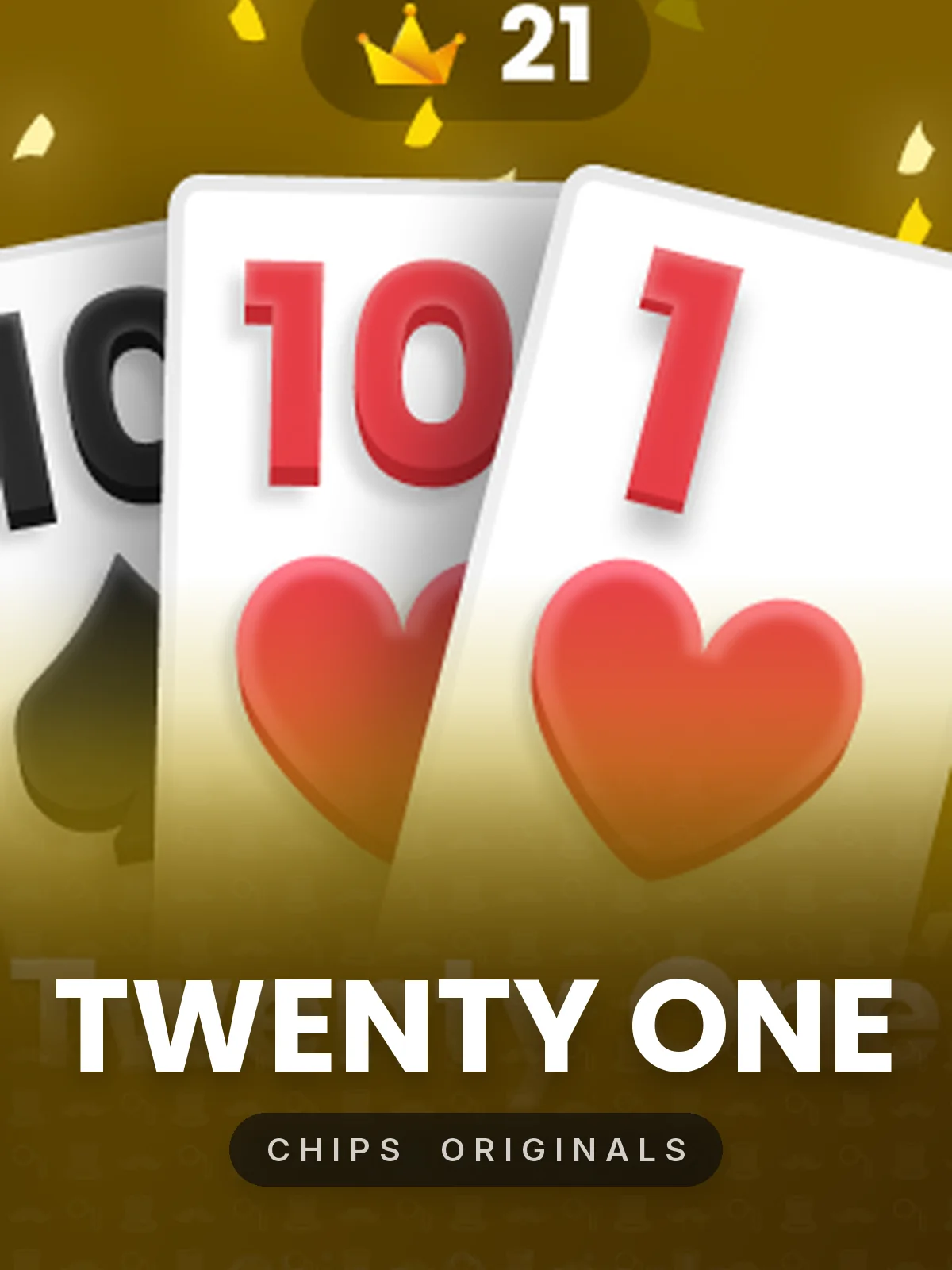
Twenty One is a provably fair card game built in-house by Chips.gg with a 99% RTP as configured, and it turns blackjack scoring into a single decision: how many cards should the dealer draw? You pick a card count from 2 to 7, the deck shuffles, that many cards are drawn, and the hand's blackjack value decides your payout from a fixed table. Score 16 through 21 and you are paid; anything below 16, or any bust, pays nothing. There is no hitting, standing, or splitting; the entire game is choosing your ruleset before the draw, which makes it the purest volatility dial in the Chips Originals lineup: 2 cards plays like a steady table game, 7 cards is a 1,600x lottery ticket.
Quick Facts
| Fact | Detail |
|---|---|
| Game | Twenty One |
| Provider | Chips Originals (built in-house) |
| Game Type | Card draw vs a fixed paytable |
| RTP | 99% (as deployed at Chips.gg, exact on every card count) |
| Volatility | Selectable, rises steeply with card count |
| Max Multiplier | 1,600x stake (21 on the 7-card draw) |
| Card Counts | 2 to 7 cards per draw |
| Paying Scores | 16 through 21; below 16 or bust pays nothing |
| Card Values | 2-10 face value, face cards 10, Ace 1 or 11 |
| Provably Fair | Yes, server seed + client seed + nonce verification |
Facts verified September 2026 against the live Chips.gg game configuration.
Game Features and Bonuses
Twenty One's feature set is the paytable itself, and it rewards reading before betting.
The Choice: Your only decision is the card count, 2 through 7. It is made before the draw and defines the whole risk profile of the round.
The Paytable: Each card count carries its own payouts for scores 16 to 21. Two cards pays 5x for a natural 21; seven cards pays 1,600x for threading a 21 through seven cards without busting, and 400x to 1,000x even for 17 through 20.
The Balancing Entry: The 16 score is the table's tuning knob: its payout is set to a precise decimal on every row so that each card count returns exactly 99%. No count is a better deal than another; they differ only in how the 1% edge is distributed between frequent small wins and rare huge ones.
No Bonus Rounds: None, by design. The volatility selection is the feature: switching from 2 cards to 7 cards changes the game more than any free-spins mode could.
Provably Fair Verification: Every shuffle derives from a hashed server seed committed before the bet, your client seed, and a nonce. The verifier returns the multiplier, outcome, and score for any past hand, so the draw itself is auditable.
Gameplay Mechanics and Strategies
Twenty One resolves in one call: bet, draw, payout. No mid-hand decisions exist.
Unique Mechanics: The dealer draws exactly the number of cards you chose from a standard 52-card deck, and the hand is scored by blackjack rules (aces count 11 or 1, whichever helps). More cards means more ways to reach high scores and far more ways to bust, which is why the 7-card table pays 400x just for landing a 17.
In-Game Dynamics: At 2 cards, paying scores land often and payouts run 0.4x to 5x. At 5 cards a 21 pays 40x; at 6 cards, 200x; at 7 cards the whole table is triple digits or better. The bust rate climbs alongside, so long dry runs are the price of the big ceilings.
Player Strategy: This is the honest part: every card count returns the same 99%, verified exactly against enumeration of the deck. No count is smarter than another, and no pattern in past draws changes the next one. The only real decision is bankroll-shaped; low counts for session length, high counts for a shot at four-figure multipliers. Treat the 7-card table like the lottery ticket it is.
Comparison with Similar Slots
Twenty One's relatives in the Chips Originals lineup share the 99% RTP and provably fair engine but place the decisions differently. Blackjack is the strategic cousin: the same 21-scoring, but you play the hand yourself and the configured ceiling is 8x; maximum agency, minimum variance. HiLo offers the closest thrill profile, banking a streak toward 1,338.48x with a cash-out decision every card. Video Poker pays up to 800x against a fixed paytable with a draw decision in the middle. Twenty One strips all of that to a single pre-bet choice with the biggest ceiling of the four at 1,600x.
Frequently Asked Questions
What is the RTP of Twenty One?
Twenty One runs at a 99% RTP as configured on every card count from 2 to 7. The paytable is tuned so each count returns exactly 99%, so no selection carries a better or worse house edge.
Is Twenty One provably fair?
Yes, Twenty One is provably fair. Every draw is generated from a hashed server seed published before you bet, your own client seed, and a nonce, and the built-in verifier lets you reconstruct any past hand's cards, score, and payout.
What is the max win in Twenty One?
The top multiplier is 1,600x your stake, paid for scoring exactly 21 on the 7-card draw. The 7-card table also pays 400x to 1,000x for scores of 17 through 20, balanced by the highest bust rate in the game.
How is Twenty One different from Blackjack?
There are no decisions after the bet. You choose how many cards are drawn (2 to 7) before the round; the hand is scored by blackjack values against a fixed paytable. Blackjack here gives you hit, stand, double, and split with an 8x ceiling; Twenty One trades all agency for ceilings up to 1,600x.
Can I play Twenty One for free at Chips.gg?
Twenty One is a real-stakes original without a demo mode. Minimum bets are low, so the practical way to learn the paytable is a small bet on a low card count.
Conclusion
Twenty One is the Chips Originals lineup distilled to one question: how much variance do you want? The blackjack scoring is familiar, the math is exact; 99% on every row, verified against full deck enumeration; and the 2-to-7 card choice spans everything from an even-tempered table game to a 1,600x moonshot. Players who want to steer a hand should sit at Blackjack; players who want the biggest single-draw ceiling among the Originals, with the receipts to verify every shuffle, should pick their card count here at Chips.gg.